Ngororombe
Shona name: Ngororombe — Hocketing reed pipes, vocal-instrumental polyphony
ORGANIC METRICS
Materials Used
Hollow river reeds or bamboo, Wax or clay for pitch tuning
Buzz Mechanism
Breath vibration against the hollow reed chamber
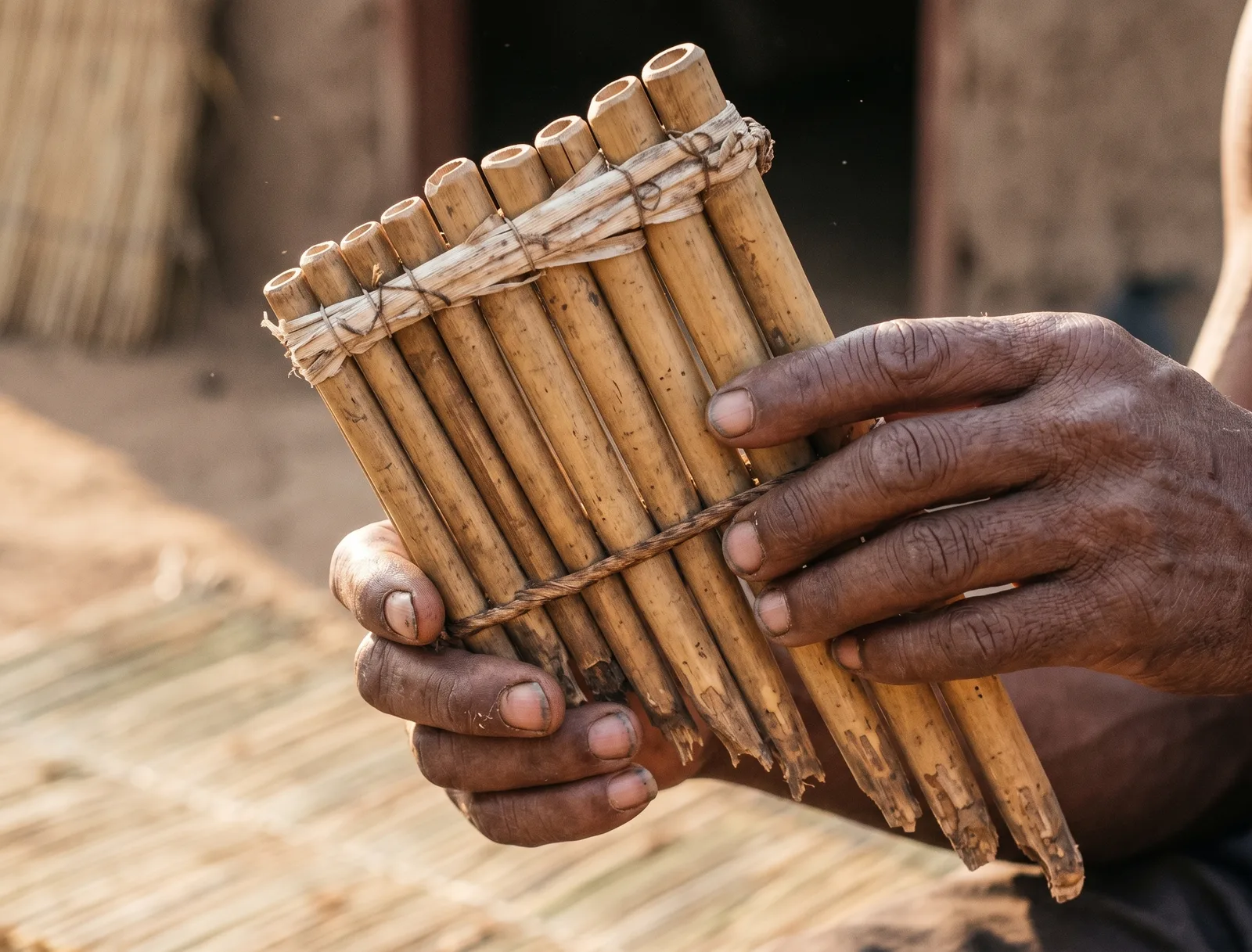
The ngororombe is a traditional panpipe instrument that exemplifies the Shona philosophy of interlocking community action. Played primarily during celebratory, social gatherings and seasonal events, the ngororombe is not a solo instrument; it requires a group of players interlocking their notes and voices to form a single melody.
Construction and Configuration
Each ngororombe player holds a small raft of hollowed river reeds or bamboo pipes, typically between two and five pipes bound together with bark strings or grass fiber.
- Reeds: The reeds are closed at the bottom (usually naturally at the node, or sealed with wax or clay).
- Tuning: Tuning is achieved by adjusting the depth of the plug. A deeper pipe yields a lower pitch, while a shallow pipe yields a higher pitch.
Hocketing and Vocal Interlock
The defining feature of ngororombe performance is hocketing—a technique where a melodic line is shared among multiple players, each playing only one or two notes of the melody in turn.
- Instrumental Note: The player blows across the top of a reed to produce a breathy, resonant tone.
- Vocal Note: Instantly after blowing the note, the player sings a corresponding vocable (usually a syllable like ha, he, or hu) in a lower or higher pitch.
By alternating blows and vocalizations across a group of four or five players, the ensemble creates a dense, rapid line of alternating reed tones and human voices. This structure means no single person owns the song; if one player stops, the melody disintegrates.
Pre-Colonial Mystical Tale: The Flute of the River Goddess
Carved from reeds growing where the Mermaid (Dziva) rested her elbows, the ngororombe hocket notes are breath fragments stolen from the water-spirits. If played too loud at midnight, the river reverses its flow to listen.