
Ngoma
Shona name: Ngoma — The pulse and heartbeat, structural rhythmic anchor
ORGANIC METRICS
Materials Used
Hardwood logs (mutiti or mukwa), Cowhide or goatskin head, Wooden pegs (hoko) or leather tension straps
Buzz Mechanism
Air resonance within the hollow log body
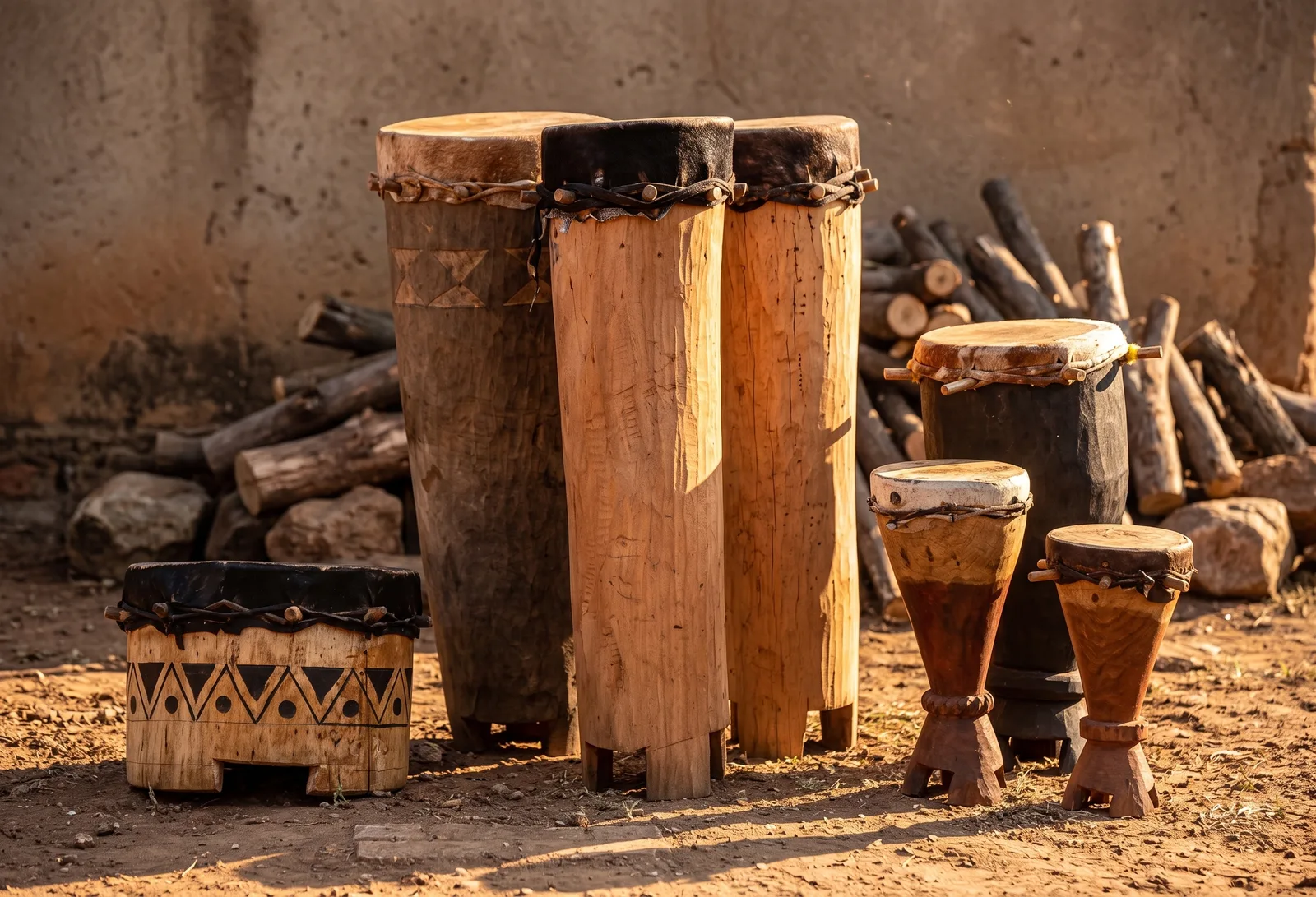
The ngoma represents the physical heartbeat of traditional Shona music. While the mbira weaves complex melodic-rhythmic lattices in the upper registers, the ngoma grounds the performance, providing the low-frequency weight and structural reference points necessary for both dancers and spirit mediums.
Anatomy and Crafting
Crafting a traditional ngoma requires deep knowledge of woodwork and animal hide behavior:
- The Body (Hombodo): The drum body is carved from a single, solid log of native hardwood. The mutiti (lucky-bean tree) or mukwa (African teak) is preferred because they can be hollowed without splitting. The interior is shaped to form a resonance chamber, sometimes leaving a narrow throat in the middle (similar to a goblet or hourglass shape) to project high and low frequencies.
- The Skin (Matehwe): Goat or cow skins are selected based on the desired tone. Goatskin provides a sharper, snapping slap, while cowhide offers a deep, rumbling bass. The hide is soaked, scraped of hair (optionally), stretched over the drum head, and secured.
- The Tuning System (Hoko): Unlike Western tension rods, traditional ngoma are tuned using wooden pegs (hoko) driven directly into the side of the drum, or through a system of braided leather straps. Wetting the skin or warming the drum head over an open fire before a performance tension-tunes the head to the correct pitch.
Polyrhythms and the Triple-Beat Grid
In Shona music, the drum does not simply beat time. It communicates. A typical ensemble employs multiple types of ngoma playing complementary parts:
- Mhito: A smaller, high-pitched drum that plays a rapid, driving pattern, often syncopating with the hosho.
- Gandira: A frame-drum style or mid-sized drum that provides the mid-range fills.
- Nduruma: The large, heavy bass drum that sounds the deep pulses, usually accenting the primary structural markers of the 12-beat or 48-beat cycle.
Rather than adhering to a strict duple structure (like Western 4/4 time), ngoma rhythms operate on a continuous tension between 3-against-2 polyrhythms. A single phrase might be felt simultaneously as four groups of three beats or three groups of four beats. This rhythmic ambiguity allows dancers to choose different focal points, physicalizing different layers of the music.
Pre-Colonial Mystical Tale: The Drum That Walked Across Rivers
During the Great Migration of the Rozvi, the master drummer bound his grand nduruma to his chest with wet sinew; when crossing the flooded Zambezi, the drum beat by itself beneath the water, guiding the entire clan through the crocodile-filled currents without a single casualty.