
Mbira dzavadzimu
Shona name: Mbira dzavadzimu — The voice of the ancestors, lead melodic instrument
ORGANIC METRICS
Materials Used
Mubvamaropa wood (gwariva), Cold-forged steel keys (simbi), Dried calabash (deze), Brass beads/shells (machachara)
Buzz Mechanism
Machachara (metal beads attached to the soundboard or calabash rim)
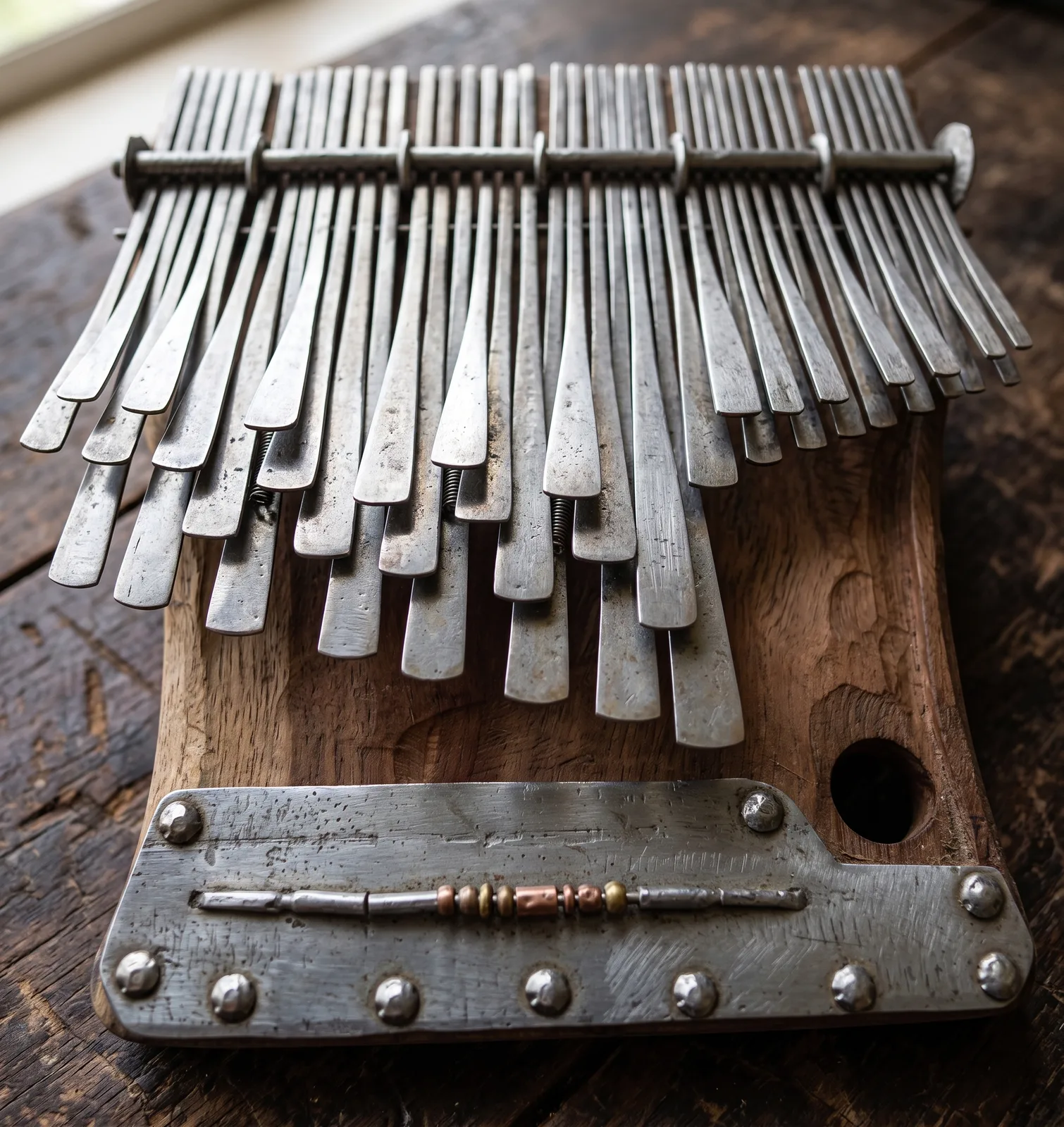
The mbira dzavadzimu (literally “mbira of the ancestral spirits”) is the foundational instrument of Shona musical, spiritual, and communal life. A lamellophone of ancient origin, it is not merely a musical instrument but a medium through which the living communicate with the ancestors (vadzimu). The instrument consists of three primary components: the wooden soundboard (gwariva), the forged metal keys (simbi), and the resonator calabash (deze).
Anatomy and Construction
The structural integrity of the mbira dzavadzimu is defined by the strict choice of materials, each selected for its acoustical properties and cultural significance:
- The Gwariva (Soundboard): Historically crafted from the mubvamaropa tree (Pterocarpus angolensis, commonly known as wild teak or bloodwood), the gwariva must be hard enough to hold the metal bridge system under intense tension while remaining resonant. The wood is seasoned over months to prevent warping.
- The Simbi (Keys): Individually cold-forged from recycled iron or high-tensile spring steel, the keys are beaten, shaped, and tuned by hand. A standard mbira dzavadzimu contains between 22 and 28 keys arranged in three registers: the low-left (bass), mid-left, and high-right.
- The Deze (Calabash Resonator): To project the sound of the metal keys, the gwariva is wedged inside a hollowed-out, dried calabash gourd (deze). The gourd acts as an acoustic amplifier.
- The Machachara (Buzzers): Essential to the traditional sound, metal bottle caps, shells, or brass beads (machachara) are attached to the lower edge of the gwariva or the rim of the deze. When the keys are plucked, these beads vibrate sympathetically, creating a persistent, metallic buzz.
The Sound of the Buzz: Machachara and Acoustic Hum
In Western musicology, noise is often treated as something to be filtered out or minimized. In Shona mbira music, the buzz is the essence of the sound. The machachara creates an envelope of white noise that wraps around the pure tone of the steel keys.
This acoustic hum serves three crucial functions:
- Sustaining the Note: The metal keys have relatively short sustain when dry; the sympathetic rattling of the machachara extends the presence of each note in time, filling the gaps between plucks.
- Creating a Sonic Ceiling: The white-noise layer blurs the separation between individual notes, allowing the listener to perceive “inherent melodies” (secondary lines that arise from the interaction of the high and low registers).
- Spiritual Invocation: Culturally, the buzz is said to resemble the sound of wind rustling through trees or falling rain, sounds traditionally associated with the presence of ancestral spirits during bira ceremonies.
Performance Theory: Kushaura and Kutsinhira
An mbira performance is almost never a solo endeavour. The musical texture is woven from two interlocking parts that interlace to form a single, hypnotic cycle, typically spanning 48 pulses:
- Kushaura (The Lead): The kushaura is the primary part, initiating the performance. It provides the melodic framework and determines the song’s rhythmic orientation. It is often faster and contains the prominent treble variations.
- Kutsinhira (The Interlocking Part): The kutsinhira is the secondary, responding part. It is typically offset by a single pulse or half-beat, interlocking with the kushaura. The kutsinhira often reinforces the bass register, playing a beat behind or creating a syncopated counterpoint.
When played together, the kushaura and kutsinhira create a dense, polyrhythmic web. Because the parts interlock rather than synchronize, they produce a rapid stream of notes where the ear begins to group sounds by pitch rather than by part. The resulting melody belongs to neither player; it is an inherent melody that emerges solely in the space between the parts.
Cultural and Ceremonial Context
The mbira dzavadzimu is the central anchor of the bira ceremony—an all-night gathering where community members seek counsel, protection, or healing from their ancestral spirits. The music is played continuously for hours, acting as a spiritual bridge to induce trance states in spirit mediums (masvikiro).
Traditional repertoire consists of pieces that have been passed down for centuries. These songs are not static compositions; they are elastic, cyclical frameworks that allow the musicians to cycle through variations based on the energy of the ceremony and the needs of the medium.
Sacred Site Attachment & Moral Grounding: Great Zimbabwe & Chaminuka Rock
At the monumental stone terraces of Great Zimbabwe (Dzimbahwe) and beneath the sheltering canopy of the sacred muisha tree at Chaminuka’s Rock in Chitungwiza, the mbira was never merely played for pleasure—it was the instrument of moral accounting.
The Moral Teaching: The master players of old taught that the steel keys of the mbira are like the laws of the plateau: if forged with greed or struck with arrogance, the tines go dead and the ancestors turn their backs. The kushaura and kutsinhira interlock to remind the community that no individual can sustain a society alone; cooperation is the breath of human survival. When a ruler sat in the Great Enclosure, the mbira warned him that power without stewardship is like dry thatch waiting for lightning.