
Magavhu
Shona name: Magavhu — Dancer's percussion, physicalized pulse sync
ORGANIC METRICS
Materials Used
Dried wild gourds (magavhu), Dry seeds or small pebbles, Woven reeds or leather straps
Buzz Mechanism
Seeds shaking within dried shells strapped to legs
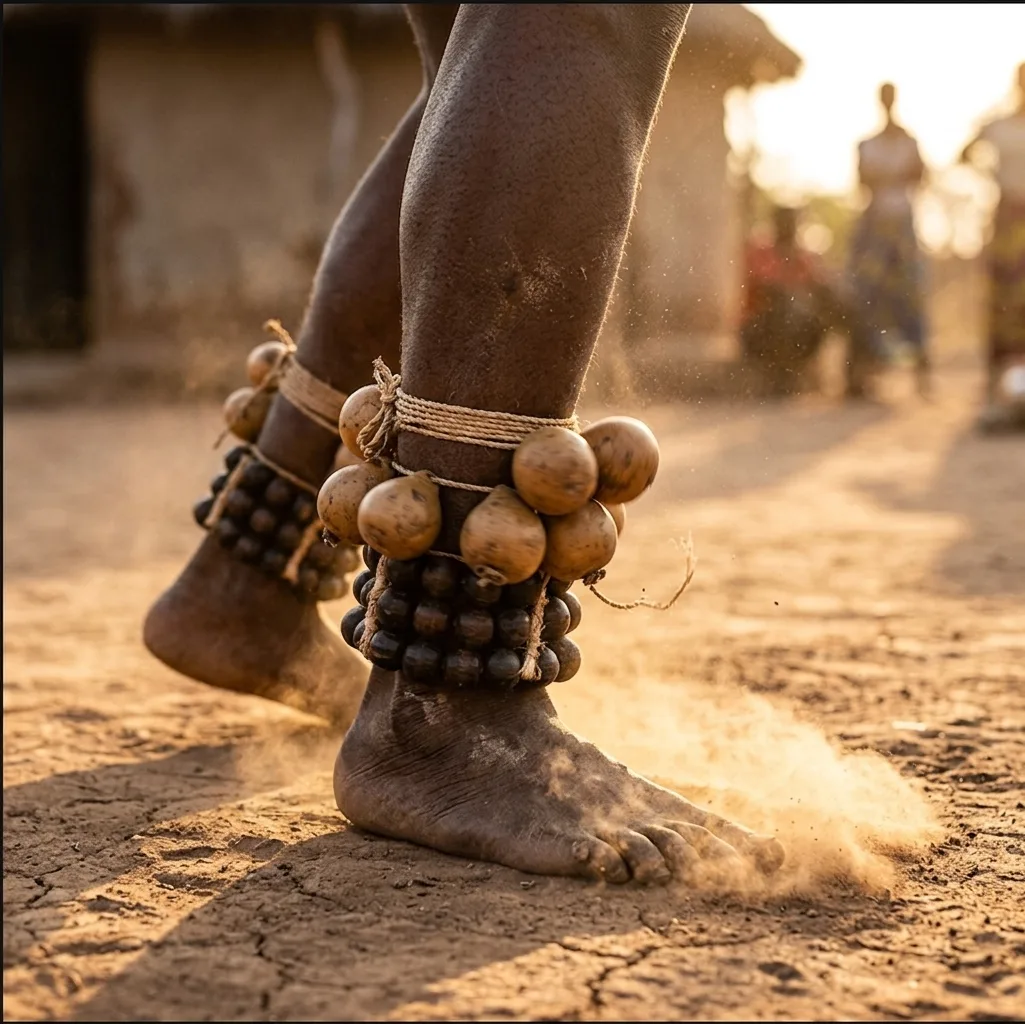
The magavhu (leg rattles) represent the physical bridge between the music and the dancer’s body. In Shona performance, dancing is not a reaction to the music; it is an active percussive contribution. Worn around the calves of dancers and sometimes the musicians themselves, the magavhu translate physical movement directly into percussive accents.
Structure and Build
- The Shells: Magavhu are made from small, dried wild gourds or cocoons of specific moths (chrysalis), cleaned out and filled with hard seeds, fine gravel, or small pebbles.
- The Mount: These shells are strung together in rows and mounted onto a backing made of woven reeds, canvas, or leather straps. The backing is wrapped and tied securely around the lower leg, just below the knee.
Syncope and Physicalized Accents
When a dancer stamps their feet, the seeds inside the magavhu crash against the dried shells, producing a loud, sharp, scratching sound that cuts through the bass of the ngoma.
- Micro-Timing: Unlike the steady, continuous sweep of the hosho, the magavhu are dynamic. They mark the offbeats, the syncopations, and the moments of rhythmic transition (kuchinha).
- Feedback Loop: The magavhu give the mbira and ngoma players immediate physical feedback. A change in the dancer’s footwork alters the percussive pattern, prompting the musicians to shift their variations in response.
Pre-Colonial Mystical Tale: The Cocoon’s Resurrection
The dried moth cocoons on the dancer’s legs are not mere noise-makers; they are the armor of warriors who fought invisible demons in the pre-colonial mist. Every stomp is a shield clashing against the dark.